闯关东
China-Tanzania healthcare cooperation brings AI-powered diagnosis to patients_我的网站

A | Kamal Haasan has never been the sort of public figure who settles for the easy answer. True to form, the actor turned parliamentarian offered a strikingly direct response at the Hortus Art and Literature Festival in Kerala when he was asked about the political landscape ahead of the 2026 Tamil Nadu assembly elections. For those expecting a sharp remark about Vijay and his new party Tamilaga Vettri Kazhagam, Kamal steered the conversation to a space far removed from personality driven rivalries.The newly elected Rajya Sabha member stated firmly that Vijay is not his political opponent and that his principal adversary is caste discrimination. Speaking to an attentive audience, he said his chosen enemy is casteism, which he described as a violent and deeply embedded force that must be addressed swiftly and without hesitation. His tone was measured, but the urgency in his words made it clear that this was not a line designed for applause. It was a declaration of the direction he intends to take as his political presence gains renewed momentum.The question was prompted by discussions around Vijay’s political entry and the perception that his party may emerge as a significant challenger to the Dravida Munnetra Kazhagam in the coming cycle. Kamal, however, refused to frame the narrative as a direct clash between two actors who transitioned into public life. He reminded the audience that his entry into the Upper House followed an understanding with the DMK during the 2024 general elections. His remarks carried an undertone that suggested political battles rooted in personality are less important to him than the long struggle against social injustice.
Kamal on Vijay: Respect, Distance, and PatienceWhen asked if he had advice for Vijay, Kamal responded with humility. He said he is not in a position to advise anyone and added that he himself rarely benefitted from advice in his youth because it never arrived at the right time. He called Vijay his brother and said that experience is the best teacher, one that arrives without bias and leaves behind lessons that no mentor can replicate. It was a thoughtful response, one that signalled camaraderie but also hinted at the individual journeys both men are undertaking. Vijay’s rise in politics has been under intense public scrutiny ever since he announced plans to step away from cinema after completing Jana Nayagan, due for release on January 9. Market watchers expect his transition to politics to accelerate once the film hits theatres.For Kamal, the political road ahead is both familiar and refreshed. His Makkal Needhi Maiam, founded in 2018, has built its own share of loyal supporters over the years. His new role in the Rajya Sabha adds another layer to his political identity, giving him a national platform while he prepares for the upcoming state elections. Yet his message in Kerala suggested that he is intent on focusing on a broader reformist agenda rather than a headline chasing rivalry.
A Busy Slate for Two Titans of Tamil CinemaOn the film front, Kamal Haasan continues to juggle an eclectic mix of projects. He was last seen earlier this year in Thug Life, directed by Mani Ratnam, and is now collaborating with action choreographer duo Anbariv for their directorial debut KH237. He is also producing Rajinikanth’s Thalaivar 173 under the Raaj Kamal Films International banner, a reunion that has already stirred excitement among fans.Vijay, meanwhile, returned to screens in 2024 with The Greatest of All Time, which sparked a conversation about his evolving screen choices before he embarks on a full time political career. All eyes are now on Jana Nayagan, directed by H Vinoth, which is positioned as his final film before he shifts focus entirely to public life.As the state gears up for an intense electoral cycle, Kamal Haasan’s comments stand out for their clarity. In a landscape that often defaults to personality clashes, he has chosen to position his battle against a deeper, structural issue. Whether this approach will reshape the narrative around the 2026 race remains to be seen, but his words in Kerala have certainly set the stage for a different kind of conversation.Also Read: South Indian Legends Mourn Dharmendra。

B |
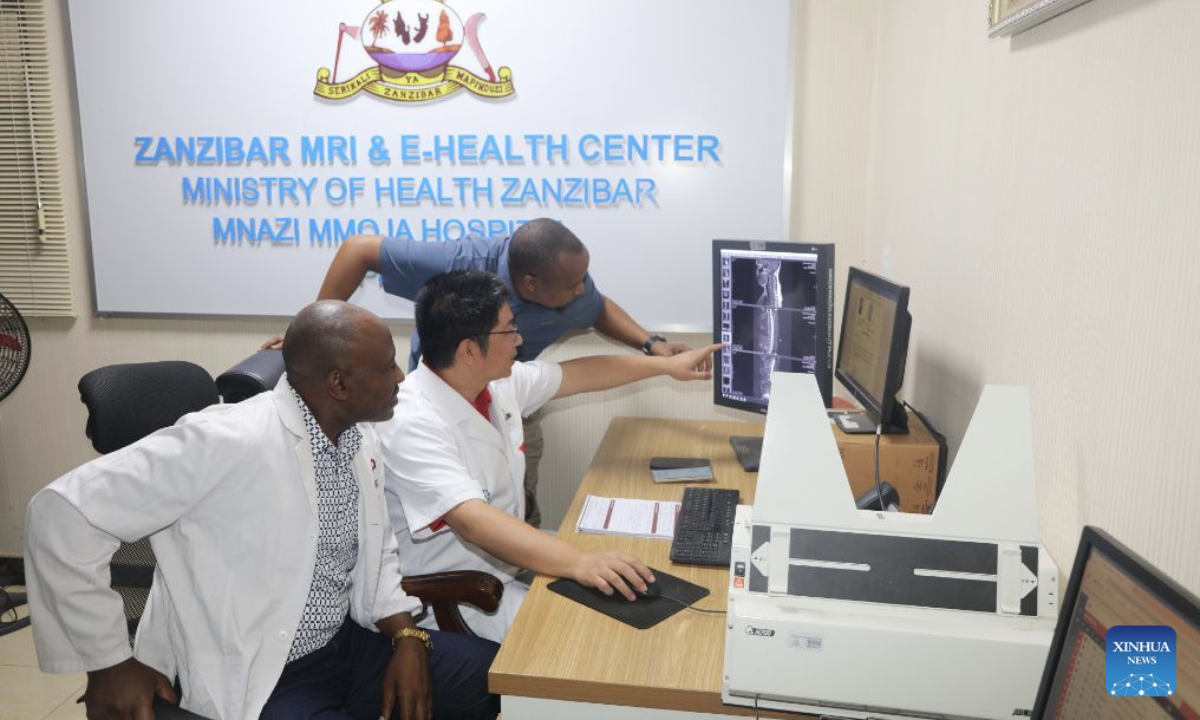
This photo taken on May 28, 2026 shows Yuan Gang, a radiologist with the 35th Chinese medical team in Zanzibar, discussing MRI images with local doctors at Mnazi Mmoja Hospital in Zanzibar, Tanzania. (The 35th Chinese medical team in Zanzibar/Handout via Xinhua)In a radiology room at Lumumba Regional Hospital in Tanzania's Zanzibar, a quiet technological shift is reshaping how doctors detect disease, make decisions, and save lives.
On the island, artificial intelligence (AI) systems are helping doctors interpret medical images, while remote consultations connect local physicians with specialists thousands of kilometers away.
Bridging this distance is Yuan Gang, a radiologist with the 35th Chinese medical team in Zanzibar, who combines local imaging, cloud-based AI analysis, and real-time specialist consultations.
For years, Zanzibar's healthcare system has faced challenges in diagnosing complex diseases, particularly because of limited imaging expertise, heavy workloads, and the lack of advanced diagnostic tools, said local physician Haitham Hamudu.
Imaging interpretation, often described as the "eyes" of modern medicine, has been especially constrained by limited expertise, heavy workloads, and a lack of advanced tools, Haitham said.
By linking the hospital's imaging system with the First People's Hospital of Lianyungang in east China's Jiangsu Province, he has introduced a three-layer diagnostic approach, which includes initial reading by local doctors, AI-assisted detection and classification, and quality control through Chinese specialist review.
This hybrid model is enabling doctors in Zanzibar to access the precision and standards of top-tier Chinese hospitals without requiring patients to leave the island.
"Technology is allowing us to overcome distance and resource gaps," Yuan said. "It is not just about solving one case, but about building a system that improves care for many patients."
One of the most striking cases involved a young Zanzibari child suffering from recurrent vomiting and lethargy.
After reviewing the child's Magnetic Resonance Imaging scans, Yuan diagnosed hydrocephalus but found the underlying cause unclear. He immediately initiated a remote consultation with neuroradiology experts in the Chinese city of Lianyungang.
By jointly reviewing the imaging data and clinical records, the team identified the hidden cause, provided a precise diagnosis and treatment recommendations, giving local doctors a clear path forward and the child a renewed chance at recovery.
Beyond individual cases, Yuan has introduced AI-powered imaging tools to improve diagnostic accuracy in Zanzibar.
He said many women have dense breast tissue, making breast cancer harder to detect with conventional mammography. AI-assisted mammography now analyzes images, classifies lesions using the internationally recognized Breast Imaging Reporting and Data System, and helps doctors assess malignancy risk.
In one case, a 42-year-old woman with mild breast pain showed no obvious abnormalities on routine examination. AI, however, detected two hidden nodules and accurately classified their risk, helping doctors avoid unnecessary procedures while ensuring timely follow-up.
Similarly, AI-assisted lung imaging is improving the early detection of pulmonary nodules that are often missed in manual readings.
In one case, a 56-year-old man with a chronic cough was initially diagnosed with inflammation. Yuan's review, supported by AI analysis, identified four small nodules, including one with high-risk features, prompting closer monitoring and potentially preventing the progression of an early tumor.
Beyond diagnosis, Yuan is helping local doctors adopt AI tools, standardized reporting systems, and structured diagnostic methods through hands-on training and case-based teaching, improving diagnostic accuracy while strengthening local capacity.
The AI imaging initiative is part of a broader digital healthcare partnership between China and Tanzania's Zanzibar, Yuan said.
The hospital and its partner institution in Lianyungang have established regular remote multidisciplinary team consultations, bringing together specialists in neurosurgery, oncology, and other disciplines to jointly review complex cases and develop treatment plans.
"I have never seen this kind of consultation before," said local physician Haitham. "So many experts working together, providing practical solutions. It is very inspiring."
Bao Zengtao, leader of the Chinese medical team, said remote consultations not only improve patient care but also enhance the professional capacity of local healthcare workers.
Yuan added that the ultimate goal is to build a sustainable model that can be expanded across Africa, ensuring more patients have access to accurate diagnosis and timely treatment.
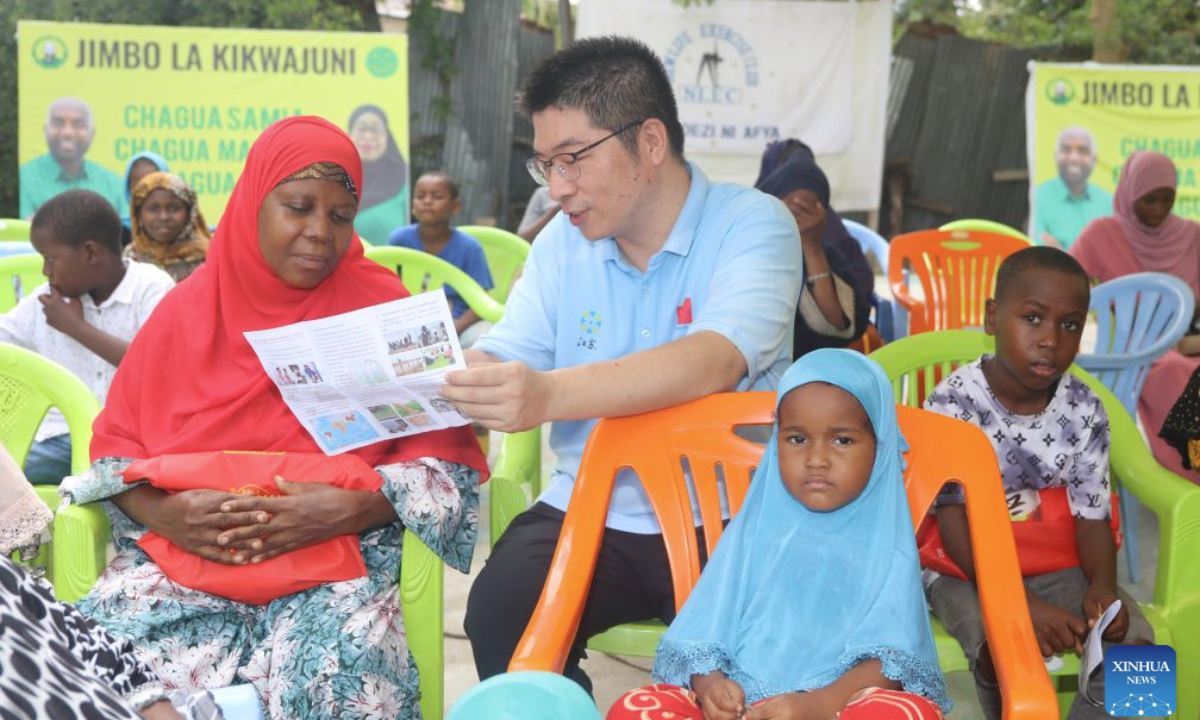
This file photo taken on Oct. 8, 2025 shows Yuan Gang, a radiologist with the 35th Chinese medical team in Zanzibar, talking with a local resident during a community health outreach activity in Zanzibar, Tanzania. (The 35th Chinese medical team in Zanzibar/Handout via Xinhua)
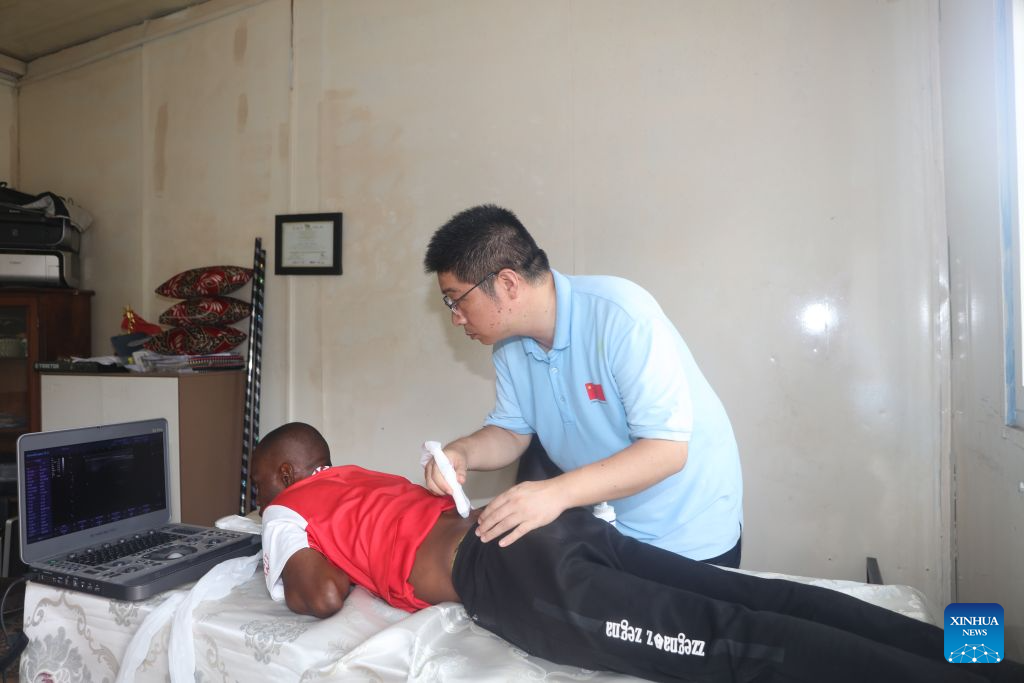
This file photo taken on Oct. 8, 2025 shows Yuan Gang, a radiologist with the 35th Chinese medical team in Zanzibar, performing an ultrasound examination on a patient at a local health facility during a community health outreach activity in Zanzibar, Tanzania. (The 35th Chinese medical team in Zanzibar/Handout via Xinhua)
。
Current article:http://www.cousizhegaobaolengkuo.bond/35qzyy/aehb0.xls
Published on:16:57:13


