


海派甜心
China's commercial freight volume hits 4.9 billion metric tons in July_我的网站

A |
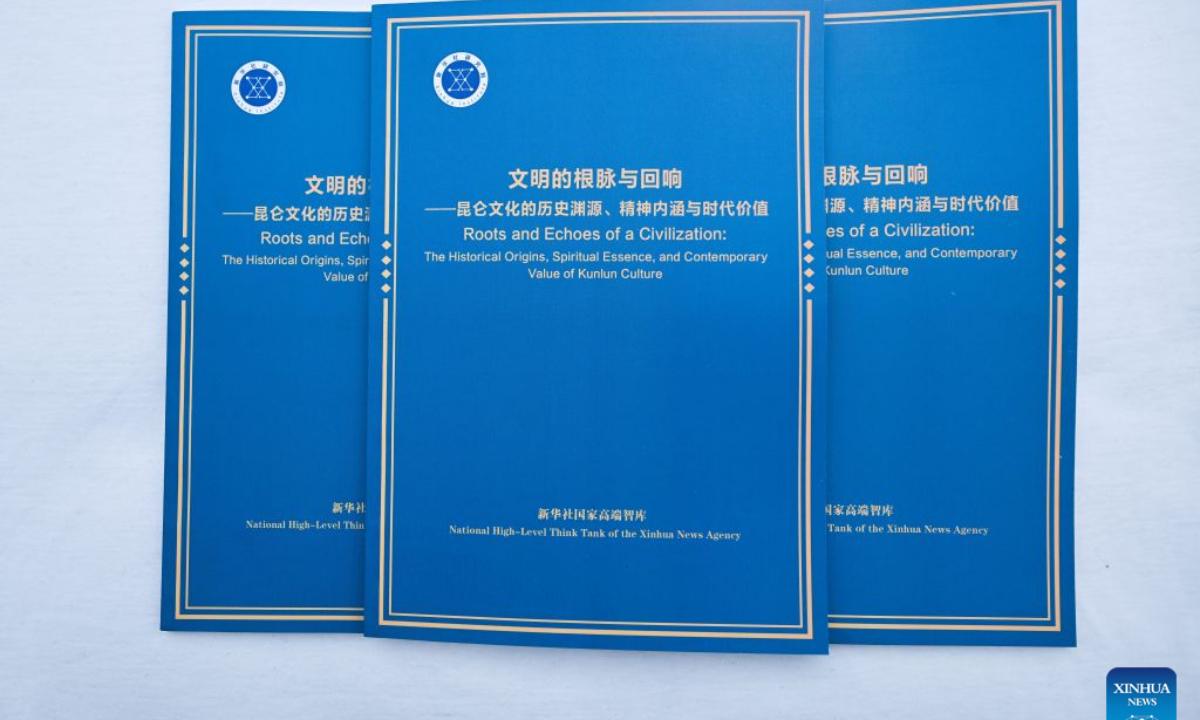
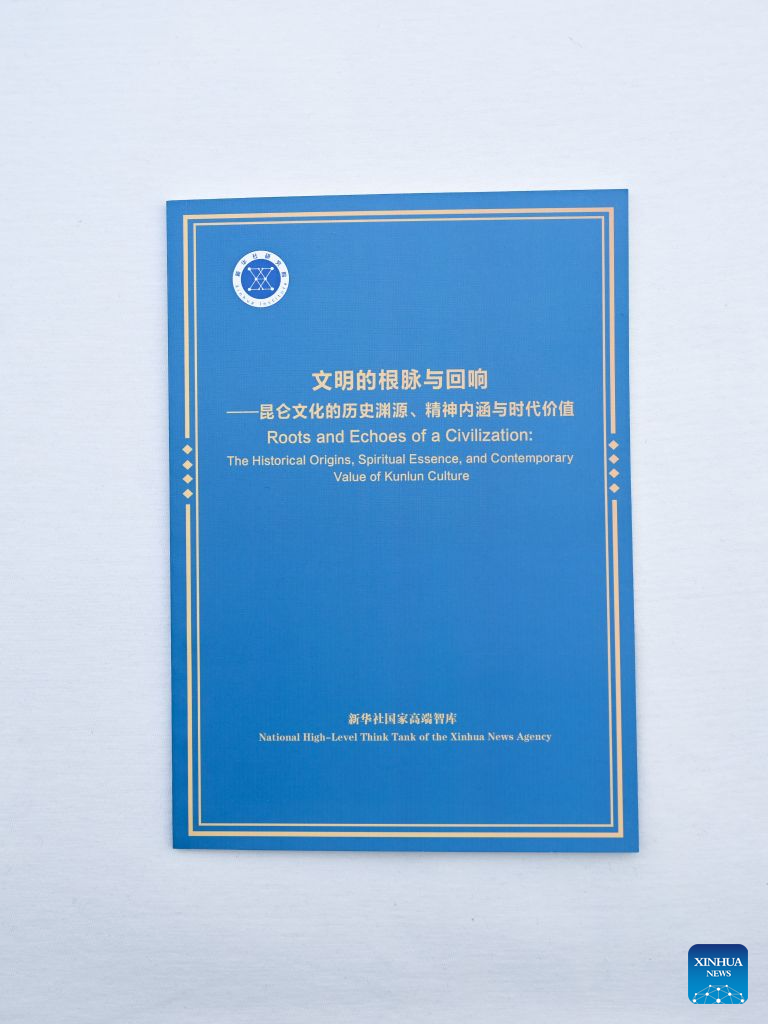
The National High-Level Think Tank of the Xinhua News Agency unveiled the Chinese and English versions of the report at the Kunlun Culture Forum in Xining, capital of northwest China's Qinghai Province.
The report describes Kunlun culture as an important origin of Chinese civilization and a vital spiritual emblem of the Chinese nation. It said the culture offers both theoretical and practical guidance for carrying forward fine traditional Chinese culture, forging a strong sense of community for the Chinese nation, and advancing exchanges and mutual learning among civilizations.
Stretching over 2,500 km across western China with an average elevation surpassing 5,000 meters, the towering Kunlun Mountains have long been revered as "the ancestor of all mountains and the source of all waters."
Drawing on archaeological evidence and historical records, the report said Kunlun culture carries the historical memory of shared origins and symbiosis among ethnic groups in three dimensions: the cosmic cognition of early Chinese people, the spiritual homeland of the Chinese nation, and the territorial symbol of ancient China. It also confirmed the unity in diversity and inclusiveness of Chinese civilization.
The report summarizes five core values of Kunlun culture: harmony between man and nature, great unity, vigorous self-improvement, cherishing life and caring for the people, and all under heaven as one family.
Rooted in millennia of cultural inheritance and ethnic integration, these values have shaped the cosmological view, the state view, the ethos of great resolve and perseverance, the people-centered view, and the worldview of Chinese civilization.
In the new era, Kunlun culture has undergone creative transformation and innovative development.
Local regions have tapped into Kunlun cultural resources and made coordinated efforts to advance cultural inheritance, ethnic unity, ecological conservation and industrial development, said the report.
Through initiatives such as themed study tours, folk performances, and integrated cultural and tourism development, the regions are achieving cultural inheritance, the continuity of national ethos, and the improvement of people's incomes and well-being.
"Exploring the wisdom embedded in Kunlun culture can provide a temperate yet profound Chinese approach to dissolving antagonism among civilizations and resolving development dilemmas," the report noted.
It added that the concepts of "harmony between man and nature" and "all under heaven as one family" in Kunlun culture offer precious oriental wisdom for resolving ecological challenges, civilizational estrangement, and geopolitical antagonism, and for advancing the building of a community with a shared future for humanity.
In Chinese mythology, Kunlun is a sacred peak where the Queen Mother of the West resides and where the Yellow Emperor, the cultural progenitor of the Chinese nation, built palaces to inaugurate the civilization of ritual and music.
At least nearly 20 ethnic groups, including the Qiang, Yi, Jingpo and Pumi, trace their ancestry to the foot of the Kunlun Mountains. Since modern times, Kunlun has been a spiritual homeland for the Chinese, often eulogized to invigorate the national spirit in times of national peril.
。 (ECNS) — China's commercial freight volume reached 4.9 billion metric tons in July, up 0.5% from a year earlier, according to the Ministry of Transport. Of the total, road freight amounted to 3.76 billion metric tons, up 1.6% year on year, while waterway freight stood at 710 million metric tons, down 2.2%. China’s port cargo throughput totaled 1.49 billion metric tons in July, down 2.9% from a year earlier. Domestic and foreign trade throughput fell 4% and 0.5%, respectively. Container throughput reached 29.9 million 20-foot equivalent units (TEUs), up 0.8%. Zhoukou Port operates 43 container shipping routes, including 29 domestic routes and 14 international routes serving 14 countries and regions. Cross-regional passenger mobility reached 5.62 billion person-trips in July, down 1.4% year on year. Road passenger mobility registered 5.07 billion person-trips, a 1.5% decline, while waterway passenger transport recorded 23.66 million person-trips, down 15.3%. Urban passenger transport volume came to 8.91 billion person-trips in July, up 2.9% year on year. Urban rail transit accounted for 2.94 billion person-trips, up 0.7%, while taxi services recorded 3.14 billion person-trips, up 9.8%. Bus and trolleybus services recorded 2.82 billion person-trips, down 1.8%, while urban ferry transport stood at 6.23 million person-trips, down 8.9%. For the January-July period, fixed-asset investment in transportation totaled 1.8152 trillion yuan ($251.4 billion). Investment in road construction totaled 1.2011 trillion yuan, while waterway investment reached 125.5 billion yuan. (By Helen Mo & intern Xu Wenda)

 。
。
B |
Current article:http://www.cousizhegaobaolengkuo.bond/5sft/cg1rx4u.doc
Published on:20:46:35
 华为宣布Mate 20倍台湾销售价格,同时推出新的平板和可穿戴设备。
 日本媒体:苹果将削减三款新iPhone生产量的10%
 购车立省5.5万 岚图品牌针对旗下梦想家车型推出限时优惠政策
 中证商品期货系列板块指数正式发布:覆盖40条细分板块指数,助力提升大宗商品...
 “绝地武士的幸存”再次大规模禁止了插件,专业运动员也没有失败地将其封死。
 政声直达|河北拿出“真金白银”助力稳就业
 曼联儿子上演C罗式超车破门,曼联球迷:比一线队球员更强
 China-Belarus Swift Eagle-2026 joint army training concluded
 用暖心服务传递更多温度(人民满意的公务员)_山清_纳税人
 Chinese consulate general to provide greatest aid to Chinese nationals killed in Russia's Amur Gas Chemical Complex fire that left 7 dead: consulate tells GT
 影响市场重大事件:NTN卫星通信先锋行动正式启动;国内首款硬膜下植入式柔性脑机接口进入“绿色通道”;水利部到2035年基本形成完备的水利遥感卫星应用体系
 当年的广厦三少之一 外号“中国库里”的赵岩昊迎来职业新起点