
妖女迷行
"China Cool" appeals to international tourists in more ways than one_我的网站

一 |
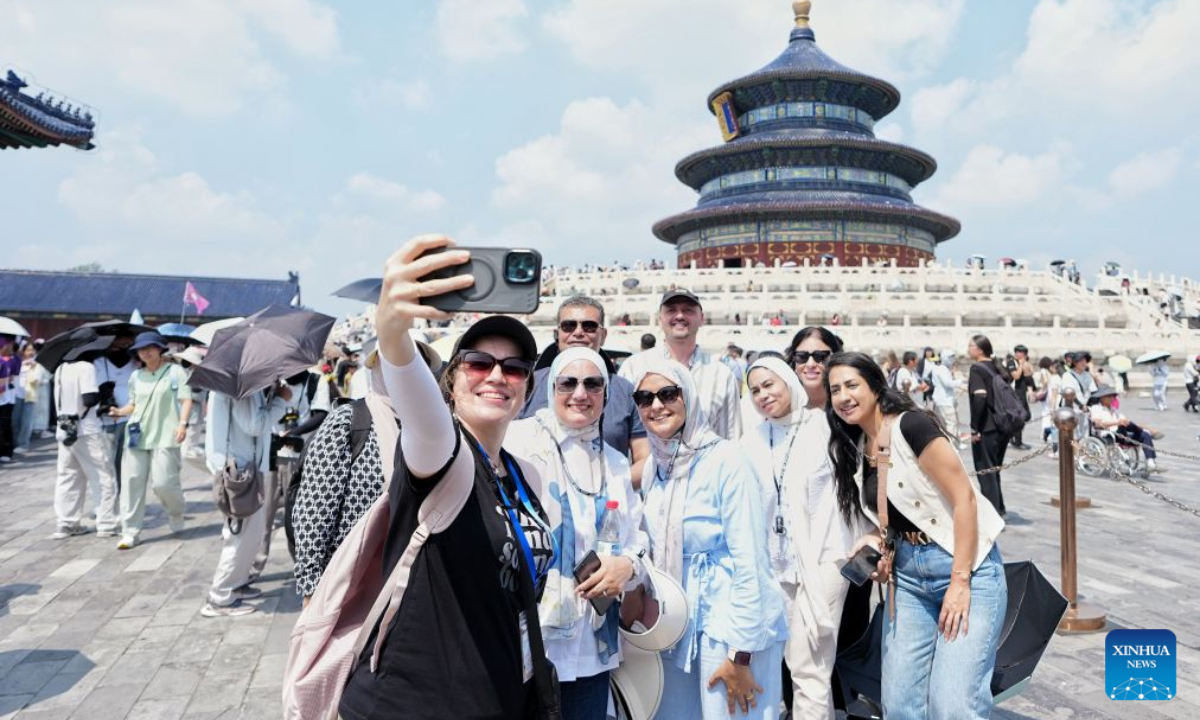
"I've come to nature's air conditioner."
That was the reaction of a Spanish tourist visiting southwest China's Yunnan Province this summer. Before arriving, he had been enduring temperatures of around 40 degrees Celsius. But when his flight landed in Kunming and he stepped out into the breeze, the relief was immediate. His trip in search of cooler weather had proved well worth it.
This summer, as heat waves swept across many parts of the world, an increasing number of foreign tourists are heading to China to escape the heat.
In places such as Zhangjiajie in central China's Hunan Province, where mountain scenery creates a natural cooling effect, and the water town in "Jiangnan," the scenic region south of the Yangtze River, where visitors can enjoy the slower pace of life by the canals, cool weather has become part of the travel experience itself. Local specialties and products that help people beat the heat add to the appeal.
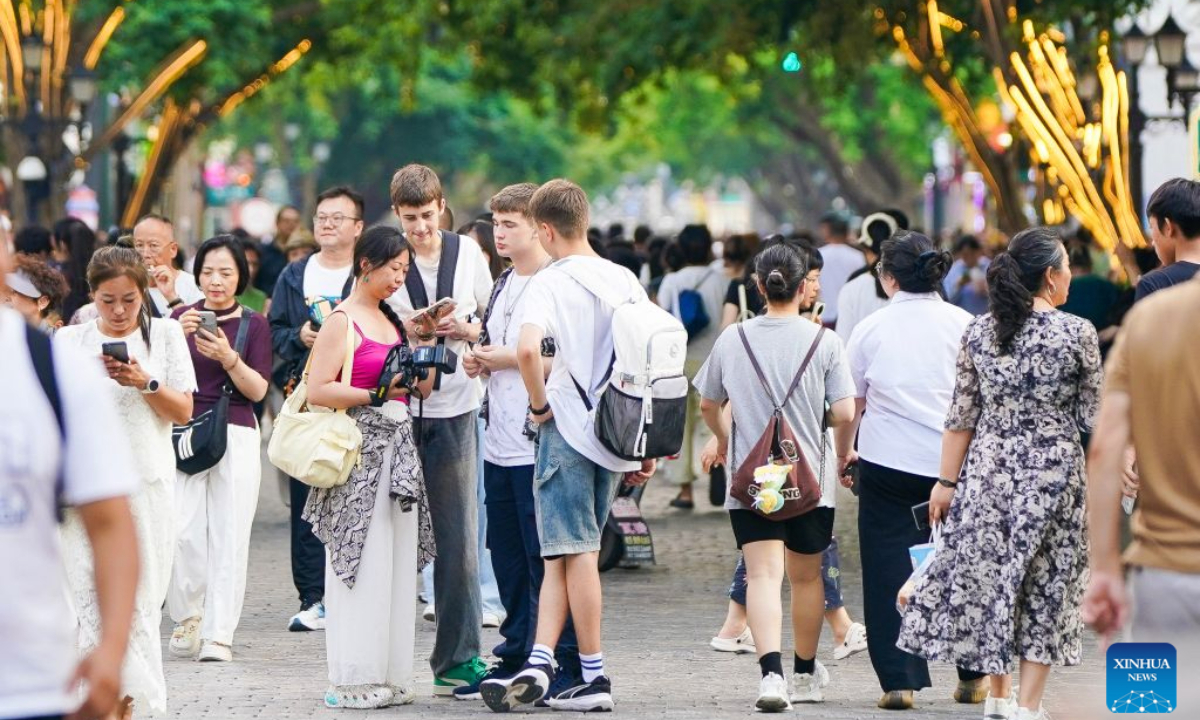
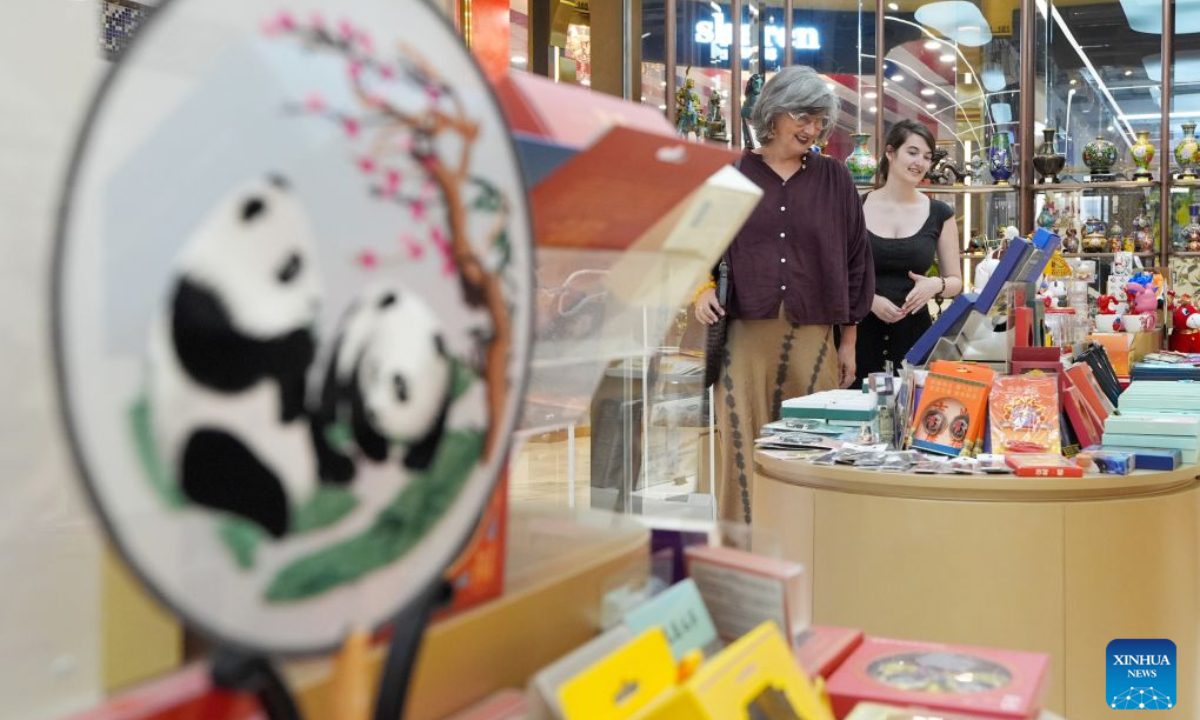
But the "cool" in "China Cool" goes beyond the weather. It also comes from the variety of experiences available to visitors. They can listen to the bells of an ancient temple at dawn, learn traditional crafts from artisans, take a high-speed train to another city, or simply order a late-night meal with a few taps on a smartphone. Such everyday experiences showcase China where tradition, convenience and modern life coexist.
That sense of "cool" is even more striking when it comes to technology. Visitors can explore smart factories, try AI glasses with real-time translation, interact with robots, and take autonomous vehicles. For many foreign visitors, these experiences offer a glimpse of China's high-tech future and add a new dimension to the country's image beyond its traditional landmarks.
The growing number of international visitors has also been facilitated by China's efforts to make travel more convenient. According to the National Immigration Administration, China received 22.91 million inbound foreign visitors in the first half of 2026, up 20.4 percent year on year. Visa-free entries accounted for 77.7 percent of this total.
As more visitors arrive and experience the country firsthand, the way China is talked about overseas is also evolving. Phrases such as "China Travel," "Becoming Chinese" and "Chinamaxxing" have gained attention on overseas social media, while "China Cool" offers a new way to capture the broader appeal of these experiences, reflecting interest in China that is no longer experienced only through its famous landmarks, but also through its culture, technology, services and everyday life.
For international visitors, China is proving to be cool in more ways than one.

。 8 月 26 日消息,当地时间 25 日,据外媒 Car&Driver 报道,宝马澳大利亚 CEO 维克拉姆 · 帕瓦认为,新车实体按键减少并非为了降低成本或提高利润,而是年轻消费者越来越习惯新的交互方式。“语音和触控的使用越来越普遍,这可能跟代际差异有关。

二 | 很多 45 岁及以下的消费者接受这些技术的速度更快,也更习惯使用语音和触控。”帕瓦还认为,年轻消费者希望科技产品能够更快完成操作。“他们希望事情能马上完成,而且经常同时处理多项任务。

三 | 我们必须把这一点考虑进去。消费者的使用习惯就是这样在变化,他们会同时做很多事情。”帕瓦这番话也引出了一个明显的分心驾驶隐患,然而纵观汽车行业,整体向触控屏转移已经成为越来越普遍的趋势。

四 | 特斯拉长期以来都把大量功能放进中控屏,不少中美造车新势力也都会采用类似设计。近几年,马自达和奔驰等传统品牌同样把越来越多车辆功能转移到车机屏幕内。帕瓦表示:“关键是要理解这种变化为什么会发生。一旦理解背后的原因,也更容易判断未来的发展方向。汽车从来不是孤立存在的产品,它也是社会变化的一部分。”报道特别提到了新世代宝马 iX3,相比老款车型,其最明显的变化之一就是实体按键大量减少。空调控制和绝大多数车辆功能都被集中到屏幕中,只剩少量控制项作为实体按键存在。

五 | 宝马并非唯一越来越依赖屏幕的汽车品牌,随着 Neue Klasse 新世代平台投入使用,宝马也将推出迄今触控化程度最高的一批车型。

六 | 而另一边,奔驰 CEO 康林松则开始反思:汽车行业在取消实体按键、全面拥抱触控操作方面可能走得有些过头。据此前报道,康林松坦言,从整体来看,车企推进数字化可能会显得过于激进。“有时候,你会过早追求某项技术,为了技术而技术,而在一定程度上忽略了客户真正的需求。
Current article:http://www.cousizhegaobaolengkuo.bond/ef5n683/lsm.html
Published on:13:21:51
我的网站相关内容
 国际志愿者日 | 因“志”而行,因“愿”而动
 Exclusive: PLA tracks, monitors US P-8A’s transit through Taiwan Straits: source
 黑幕?《GTA6》泄露投票出炉:高跟鞋、小镇战败
 AMD将向Anthropic投资至多50亿美元,双方签订AI芯片供应协议
 称重!联通移动营业厅应用开放互联网套餐变更:腾讯王卡、蚂蚁宝卡等可在线交换
 挺进足协杯4强 京粤女足争进决赛
- ·美记:库明加倾向加盟湖人 湖人招募时承诺首发 明年有丰厚合同
- ·Memorial honors Triangle Shirtwaist fire deaths that galvanized labor movement
- ·印度智能穿戴品牌 Fire-Boltt 首次进军智能手机市场,推出 Boltt Ace 5G、Evo 4G 两款新机
- ·Nanjing Massacre memorial hall receives new evidence of Japanese invasion on 81st anniversary of Japan’s surrender
- ·성평등위서 檢 보완수사권 폐지 공방…여 "검찰 권력 통제" 야 "약자 피해 우려"
- ·【品质赤峰·旅游市场清风行动】部门联动强监管 筑牢旅游出行安全防线
- ·期货收评:美伊就停火协议条款达成共识!低硫燃油重挫超8%
- ·法鹰无分成!DO:马尔穆什强制买断费用为5000万镑+1000万镑浮动
我的网站最新内容
- ·英特尔确认部分13代CPU产品搭载 VPU,14 代 Meteor Lake全面上线_Raptor_P-Cores
- ·Climeworks计划逐步淘汰其第一代碳清除技术
- ·首测硝烟再起 《大航海时代:凯旋航线》“禁忌之海”等你来战
- ·确成股份:聘任任海燕女士为公司董事会秘书
- ·记者:预计佩林转会巴勒莫今日官宣,合同期至2029年
- ·Delhi Court adjourns hearing on Delhi Health Minister Satyendar Jain case till Thursday
- ·记者:纽卡未能说服里尔,后者坚持对帕尔多7000万欧元的要价
- ·春节后,市场主线会变天吗?
- ·Indigenous leader of Guatemala protests: Defending democracy after election
- ·Microsoft Windows 1019h1快速预览版18312开始推送
- ·CD Projekt 在 Gamescom 2026 官方公告中确认 巫师4 将于 2028 年发售
- ·上半年国内手机出货量超98%支持北斗定位
- ·存储比算力更烧钱!每花100元就有68元交给DRAM和NAND
- ·太空算力技术创新中心在雄安成立
- ·出口连续2月超百万辆——中国汽车在海外市场展现竞争力,出口连续2月超百万辆——中国汽车在海外市场展现竞争力
- ·"배임 기소 공시로 기업 현금 보유 늘어…투자 위축 우려"
我的网站热点内容
- ·成功复仇!英格兰胜法国,创队史近60年世界杯最好成绩
- ·科伦博泰半年报首盈背后:一位75岁创业者的向上之路
- ·护航出行安全 道路交通安全法拟作修改
- ·星宇股份被曝批量劝退应届生 当地人社局通报
- ·总投资1.04亿元!这个项目即将进入安装阶段……
- ·沧海桑田!15/16赛季蓝狐81分夺英超,纽卡37分仍降级维拉垫底
- ·A股“股王”联讯仪器:上半年净利润5.67亿元 暴增903%
- ·硕士生签约管理岗,入职被安排打螺丝
- ·限时参考尊享价30.09万起/颜值升级 新款沃尔沃S90上市
- ·China issues red alert as Typhoon Dolphin approaches
- ·作协、残联出台意见 让残障文学人才更好发展
- ·中信证券:银行中报信号积极,绝对收益空间料将延续
- ·一纸保单一份守护,长生人寿高效理赔护航患病客户康复之路
- ·【早盘直通车】行情回顾及操作建议2026/8/26
- ·国际泳联公布巴黎奥运会游泳项目资格选拔体系
- ·一线见闻|古韵潮玩,把“烟雨楼”装进行囊