
女超人
货架上的Gigabyte Win Blade追光笔记本:极窄边框/RTX 2070,17499元_我的网站

一 |
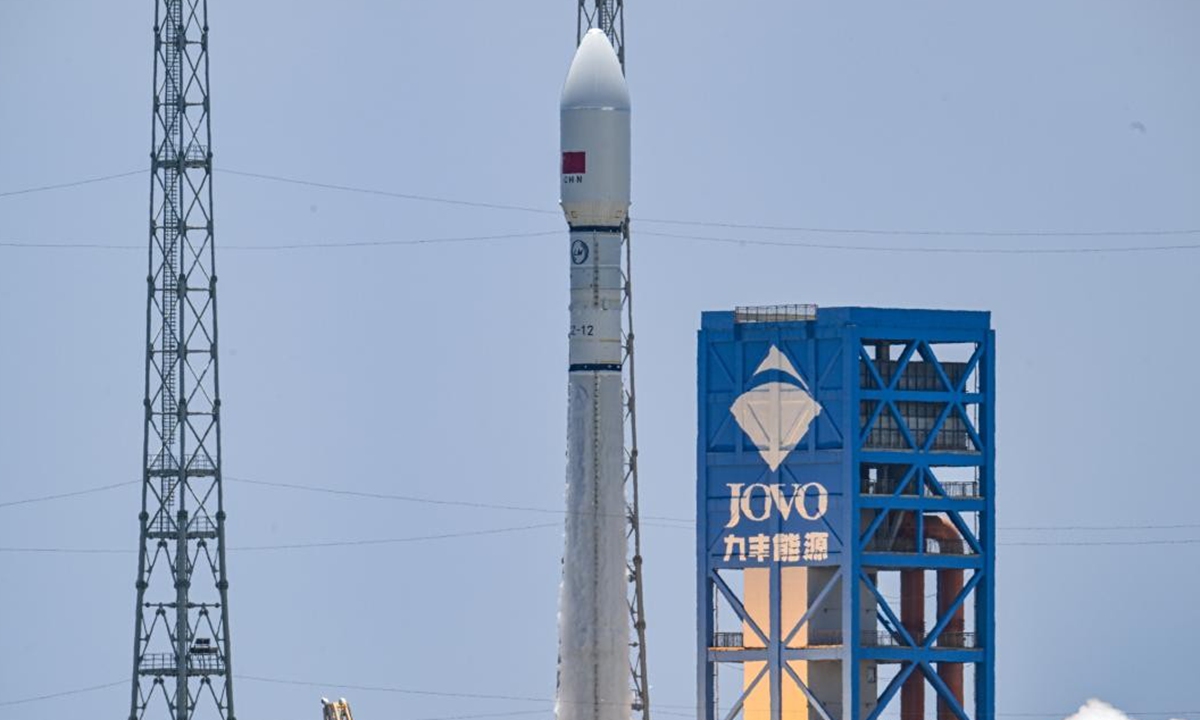
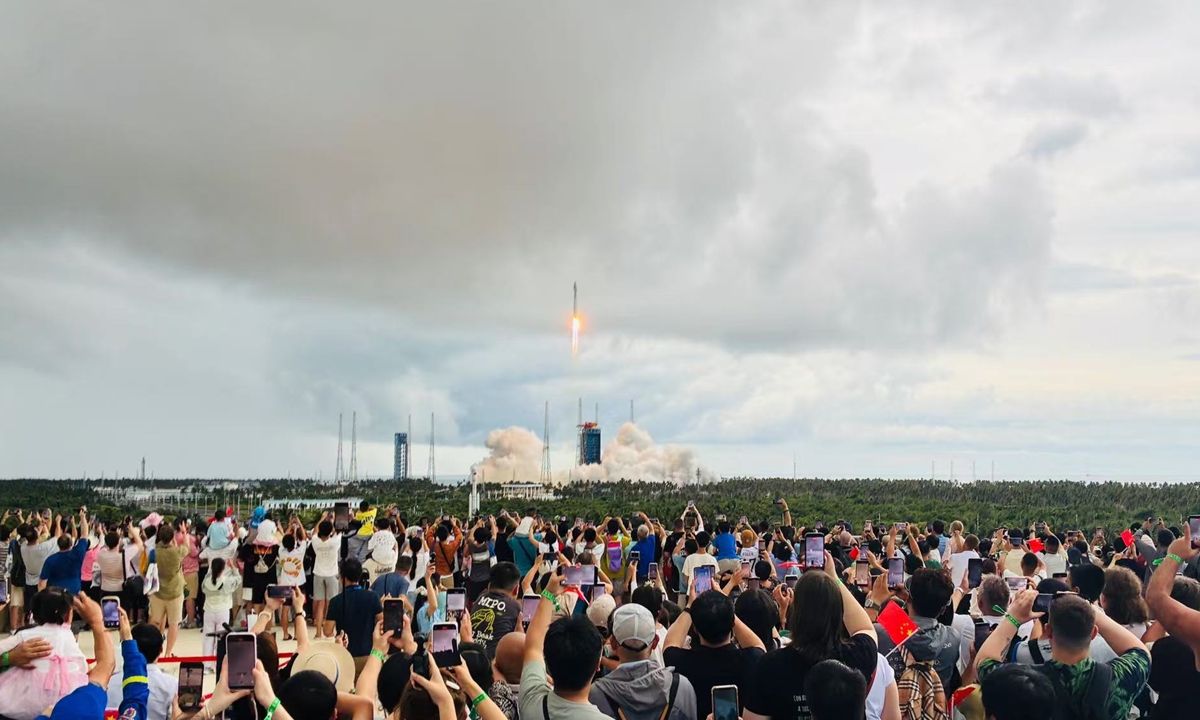
Two successful launches among China's recent frequent moves caught particular attention of space watchers - the 24th group of low-Earth orbit internet (LEO) satellites aboard a Long March-12 rocket was sent from a commercial spacecraft launch site in the southern island province of Hainan on Sunday, 12 days after the 23rd group of LEO satellites aboard a Long March-8A rocket was launched from the same Hainan site on August 4.
Sunday's mission marked the 663rd launch of the Long March series of carrier rockets, which on Monday sent an SEO satellite into preset orbit, per Xinhua.
Experts said the launches of two groups of LEO satellites within 12 days underlined that China is notably accelerating its pace of building its satellite internet constellation.
"The launch of LEO satellites has now entered a regular and cyclical rhythm, with batches of satellites continuously being sent into orbit at relatively stable intervals," Kang Guohua, a senior member of the Chinese Society of Astronautics and a professor of Aerospace Engineering at Nanjing University of Aeronautics and Astronautics, told the Global Times on Monday.
China launched the first group of LEO internet satellites on December 16, 2024, proceeding to the 24th batch in about 20 months. Kang said three major production and launch "assembly lines" are supporting the effort: satellite factories featuring centralized design in Beijing, coordinated supply chains and mass production; rockets with streamlined launch and testing procedures and multiple configurations; and launch sites capable of supporting routine constellation deployment.
The Long March-12, which played a key role in the latest LEO satellite launch, is China's first 4-meter-class single-core-stage carrier rocket and was specifically developed for commercial launch needs. It is about 62.6 meters long, has a liftoff mass of 430 tons and can carry more than 12 tons to low-Earth orbit. Its first stage is equipped with four 1,250-kilonewton pump-fed liquid oxygen-kerosene engines and uses a newly developed coal-based aerospace kerosene, according to Shanghai Academy of Spaceflight Technology.
The rocket adopts a "three-horizontal" launch preparation model: horizontal assembly, horizontal testing and horizontal transportation. Depending on mission requirements, it can use fairings with diameters of 4.2 or 5.2 meters and support both single-satellite and multi-satellite launches into different orbits.
"This flexibility makes the Long March-12 particularly suitable for the 'one rocket, multiple satellites' model required for constellation deployment, making it one of the main launch vehicles currently used for LEO constellation missions," Kang said.
The mission also highlighted the launch site's growing ability to support high-frequency launches. The rocket took only two and a half days from being transported to the launch area to liftoff, setting a record for the shortest time a rocket occupied the launch position at the site, Kang said.
Despite the rapid progress, experts cautioned that the 228 satellites currently in orbit remain some distance from the ultimate goal. China's satellite internet project has a long-term goal of deploying nearly 8,000 satellites and is now in an accelerated "weaving" phase.
China's advantage lies in its ability to control costs and boost production efficiency once satellite manufacturing reaches mass-production scale, another expert surnamed Liu told the Global Times.
"Whether it is the production capacity of AI centers or the factory in Hainan, which has an annual satellite manufacturing capacity of 1,000 units, satellite production itself is not the problem," Liu said. "More bottlenecks lie in the operational efficiency of launch pads and the rocket payload and recovery technology."
The real challenge lies in rocket reusability. Only by lowering launch costs and increasing launch frequency can China sustain a pace of more than one launch per week. This is also the strategic significance of accelerating the development of reusable rocket technology, including the Long March-10B and privately developed rockets, Kang further noted.
Chinese Academy of Engineering academician Deng Zhongliang previously said in an interview that satellite internet will serve as an indispensable space-time infrastructure for 6G, enabling emerging industries worth trillions of yuan, including the low-altitude economy, advanced autonomous driving and the Internet of Things (IoT).
。1月13日:北京东部预售了Aero15-x9 15.6英寸游戏机,这款游戏机的制胜优势是千兆字节。

二 | 它有一个非常窄的三帧设计。I7-8750H/RTX207/16GB/1T M.2/144HZ屏幕版本为17499元。

三 | 从外观上看,千兆字节赢家的Aero15-X9仍沿用上一代的设计。它的三面边界很窄,相机放在屏幕下面。配置方面,Aero15-X9配置I7-8750H6核心处理器,RTX 2070 MAX-Q版本,16GB内存,1TB M.2固态硬盘,1080p 144Hz刷新率。此外,高调版本还携带i9-8950hk处理器和RTX2080图形卡。目前,RTX2060版本还没有上架。Gigabyte Winning Edge Aero15-x9(I7-8750H RTX207 16GB 1TM.2 144HZ)17499元直连RTX 2070笔记本相关阅读:“Lei Shenguang货架追寻笔记本:I7/RTX 2070,价格14999元”。
Current article:http://www.cousizhegaobaolengkuo.bond/eyeqd/20260826/492878.ppt
Published on:10:18:17
最新文章
- 皮尔斯:魔术常规赛一直压制凯尔特人 但这轮系列赛绿军会横扫
- Netflix电视剧“黑镜”被控侵权:2500万美元的索赔
- Deepika Padukone Set to Team Up With Vicky Kaushal in Mahavatar ?
- 女篮将在临沂等六个城市举办热身赛 对手是波黑、日本和澳大利亚
- 张继科:反手好的人很难登顶,正手好的人有可能
- 帮领导打卡39次被开除!员工不服:服从领导安排有错吗?法院判了
- “趁男友不在跟暧昧者要巧克力”,德芙致歉
- 76人主场商店售卖詹姆斯球衣 大量费城球迷前往抢购并兴奋庆祝
- 林依轮儿子林子濠晒照公开恋情,“随手一拍,刚好是你”,女方是模特陈瑜
- QMT专业版量化软件免费开通使用:量化策略运行机制与策略开发详细攻略!
标签云
热门文章
- 13-year-old with little coding experience earns over 18,000 yuan from AI study tool
- 货架上的雷神广超笔记本:i7/rtx 2070,售价14999元
- 欧洲联赛主席:改革FIFA这套全球管理体系远比换掉因凡蒂诺更关键
- 2026年08月25日PTA产业价格涨跌榜
- 夏普展示了DynaBook的30周年纪念笔记本:不到800克,带有第8代i5
- 官方:中国女篮今夏将在临沂、济南等6城举办热身赛
- Zhejiang sets new record for ship-to-ship green methanol bunkering
- 2019年,第一批游戏版本数字出来:84个,腾讯网易还没有。
- Patchwork crafts gain popularity among young Chinese
- 小米股东套利近22亿港元,股价下跌2.41%。