
爱情公寓4
雨雨雨!今起南方降水再度发展,北方迎短暂升温_我的网站

A |
Chinese scientists have developed a “brain-reading” AI model that could help predict the risk of depression among adolescents up to four years in advance by analyzing how humans respond to facial expressions, a technology expected to inspire future development of embodied intelligent humanoids capable of perceiving human emotion and thoughts through nuanced facial cues.
WHO data show that around 332 million people worldwide have depression, about one-third of whom have treatment-resistant forms of the condition. In China, an estimated 95 million people suffer from depression, National Business Daily reported, citing statistics from the China Mental Health Survey.
Using data from a population-based longitudinal adolescent cohort recruited across several European countries, the research team led by Lu Han, assistant professor at the School of Artificial Intelligence, Shenzhen University, has built an AI model that predicted which 19-year-olds were more likely to develop depression at the age of 23. The predictions were backed up by an independent clinical cohort of individuals with depression. The team’s paper was published in the journal Science Advances this month.
According to Lu, the study used brain scans taken at age 19 to predict depression-related symptoms at age 23. The study focuses on adolescence because the transition from adolescence to early adulthood is a key developmental period when depressive symptoms can increase rapidly. The earlier risks are identified, the greater the opportunity for prevention, Lu told the Global Times on Monday, adding that the findings need to be further validated in middle-aged and older adults and across different ethnic groups in future research.
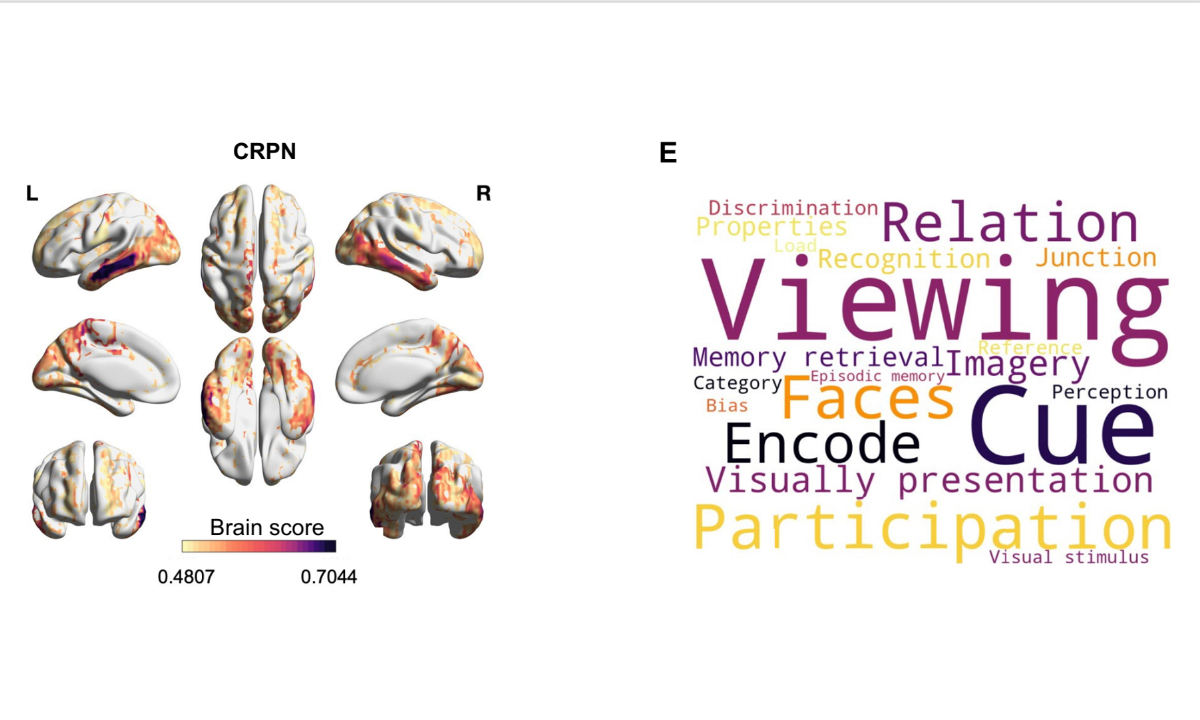
In this study, the researchers analyzed data from adolescents in the IMAGEN, a population-based longitudinal cohort recruited across several European countries. At age 19, participants underwent an fMRI emotional-face task, and their emotional symptoms were assessed using standardized questionnaires. Genetic data obtained from blood samples were also analyzed, and participants were followed up at age 23. The researchers examined whether neural representations of angry faces at age 19 were associated with emotional symptoms and could predict elevated emotional symptoms four years later.
According to Lu, people without depression can more easily distinguish emotional changes based on others’ facial expressions and respond accordingly – for example, responding with friendliness to a smiling expression. But people with depression cannot do this, and are more likely to assume people are angry with them.
A brain-aligned deep-learning model developed by Lu’s team suggested that those participants whose brains were less able to distinguish between different facial emotions and tended to perceive others as angry were more likely to develop symptoms of depression and anxiety in adulthood.
The hypothesis that adolescents at risk of depression may respond differently to other people’s facial expressions than those without such risk based on the negative information processing bias long observed in depression research: people at risk of depression are more likely to notice, interpret, or remember negative social information, Lu said.
The researchers focused on angry facial expressions because they signal social threat and rejection, which are closely linked to interpersonal difficulties and negativity bias associated with depression. They hope to further understand how this bias develops within the visual system.
Building on this, they created a deep learning model, which mimics how the brain processes visual information, to predict how the brain encodes abstract emotional concepts such as anger.
They found that 19-year-olds whose response to facial expressions was skewed in favour of negative emotions or memories were the most likely to develop some form of depression.
Based on these findings, Lu’s team then developed a marker that can identify possible warning signs.
According to Lu, the study found that the computational biomarker was linked to the depression-related variant rs11123030 and polygenic risk for depression, suggesting that genetic susceptibility may affect emotional perception. It also provided predictive information beyond family stress and socioeconomic factors, complementing rather than replacing environmental risk factors. Therefore, depression is neither purely genetic nor purely psychological, but a complex mental disorder arising from the interplay of genetic susceptibility, brain development, emotional and cognitive processes, and life experiences.
According to Lu, the study is also expected to advance AI by aligning deep neural networks with human brain activity and using parameter perturbations to probe neural mechanisms, allowing models to both predict and explain how biases may arise.
The findings suggest that future affective computing and embodied AI should go beyond simply labeling facial expressions, incorporating visual details while preventing prior assumptions from overriding real-time sensory input, Lu said, adding that the findings could provide valuable insights for developing more interpretable robotic perception systems that more closely emulate the way humans process emotions.
。 今后几天 南方降水分布依旧广泛 今天(4月24日)起 华南、江南南部等地降雨 还将再度发展增强 广东、广西等地部分地区暴雨连连 需警惕持续强降雨的叠加影响▲图源:卡乐图片。

B | 摄影:宁颖 今天南方降水将再度发展增强 江南华南等地有强降水和强对流 未来两天 江南南部、华南中东部、台湾岛等地 有大到暴雨 其中,广东中东部、台湾岛西北部等地 部分地区有大暴雨 4月24日08时至25日08时 西藏东南部、湖南南部、江西南部、 福建南部、四川南部、云南西北部、 贵州中东部、广西北部和东部、广东、 台湾岛大部等地部分地区有中到大雨 其中,广西东北部、广东西北部和东南部、 台湾岛西部等地局地有暴雨或大暴雨▲图源:中央气象台 4月25日08时至26日08时 新疆沿天山地区和伊犁河谷、 江淮、江南大部、 华南大部等地部分地区有中到大雨 其中,广西东南部、广东大部、 江西西北部、福建东北部等地部分地区 有暴雨或大暴雨▲图源:中央气象台 气象部门提醒 近期广西、广东、湖南、江西等地 降雨较强且落区高度重叠 土壤含水量趋于饱和 需高度警惕强降雨或持续降雨过后 可能出现的山洪、泥石流、滑坡等灾害 避免前往山区和地质灾害易发区 并注意防范强对流天气可能造成的不利影响 广东等地要重点关注持续降雨 带来的洪水风险和上游来水的叠加影响 广东北江干流全线洪水已出峰回落 今日夜间有明显降水过程 4月22日 笼罩广东近一周的 持续强降雨有所减弱 当日11时 北江干流全线洪水均已出峰回落 围绕防汛的各项工作 正高效地开展 据@广东天气 消息 广东已出现持续性强降水 14个市县雨量打破当地4月纪录 预计未来几日广东多雷雨天气 24日夜间起 广东又有明显降水过程 具体预报: 24日,中东部市县阵雨转大雨局部暴雨 其余市县小到中雨局部大雨 25日-27日 广东又将有大雨到暴雨过程▲图源:广东天气 近期南方降雨为何又多又强? 中央气象台首席预报员马学款介绍 4月以来,副热带高压比常年同期偏强 有利于南海和孟加拉湾水汽向南方地区输送 同时高原槽和南支系统活跃 导致南方地区强降水过程 频繁、降水持续时间偏长▲图源:卡乐图片。摄影:宁颖 另外,江南、华南等地气温 比常年同期明显偏高 大气含水量丰富、不稳定能量高 导致对流发展旺盛、降雨强度高 多地累计降水量突破4月历史纪录 北方气温多波动 今起多地最高气温将冲至30℃以上 昨天(4月23日)北方降温范围扩大 陕西、河南、 山东一直到黑龙江西北部一带 都会迎来降温 局地降幅10℃以上 但北方此轮降温持续时间很短 待冷空气影响结束后 今天开始北方又将快速进入升温通道 迎来一波回暖 陕西到河北、山东北部一带最高气温 还将有望达到30℃或以上 多地气温将刷新今年来的新高 不过 4月底北方还将有冷空气活动 届时气温又将有所下滑 总之 未来一周北方气温起伏波动较为明显 建议大家关注气温变化 及时调整着装 (小康头条微信公众号综合应急管理部、中央气象台、@广东天气、广东发布、中国天气网) 编辑:田苑淯颖 校对:武金洋 审核:王芳。
Current article:http://www.cousizhegaobaolengkuo.bond/m1mz7/fnhm.html
Published on:17:01:31
晓说_Random reading
- 08-23秋游辽宁主题推介活动走进东博会
- 08-25协同创新 活力迸发
- 08-24Pakistan EC disqualifies former PM Imran Khan in Toshakhana Case
- 08-25IT家庭学院:用于离线下载的openwrt路由系统配置aria2
- 08-21Justice DY Chandrachud to be next CJI
- 08-22Canadian autoworkers set Oct. 29 strike deadline at Stellantis
- 08-20福州晋安王庄紫阳地块签约率99%
- 08-24研究人员在实验室中培育出高效“僵尸真菌”
- 08-20Shilpa Shetty Kundra approaches Bombay High Court over misuse of her images
- 08-212025京东淘宝618活动最后5天从6月17日20点开始最便宜,京东618最新红包口令是:红包588

鸿门宴_Active users
- 【透视社·全民健康】明星带火的“碳循环减肥法”,千万别盲目学,这些方法助你健康瘦!
- 无家族,不国战《猎国ol》激情PK族旗所指皆为战场
- 于海田主持召开市政府常务会议 研究优化营商环境等事项
- New giant panda cub sparks China-South Korea joint naming vote as five options shortlisted
- Chinese prez opens 20th Communist Party Congress
- 一线见闻|游园变入戏,避暑山庄互动演出“圈粉”
- 海船擦碰九江大桥防撞墩后沉没 4人失联正在搜救
- 全新别克GL8陆上公务舱上市 22.99万 双层声学玻璃/二排贵宾座椅
- 国家发展改革委部署加快2026年新型政策性金融工具投放工作 加大对民间投资项目支持力度
- 资源下载站怎么赚钱?会员制+广告双模式运营
- 茅台回应“县级市场自营店招商”:“开店门槛30万元”“总部给予50万元装修补贴”均是虚假诈骗信息
- 炒货机器人火候拿捏堪比老师傅
- 以不变应万变?实测沃尔沃XC90
- 杭州体育发展“十五五”规划发布
- Australia to deepen military ties with Indonesia
- 站长如何利用AI工具,生成网站和自媒体爆款标题!
- Humanoid robots, autonomous vehicles speed up China's parcel delivery
- 倒计时3天!福建电商助农联盟选品库即将重磅上线
风和日丽_Hottest this week
- 08-26保时捷柏林之声音响将用上氮化镓,令低音炮更小、更轻、更高效
- 08-20韩媒关注“第一夫人时隔153天公开露面出席午宴”,照片公布
- 08-25吉林推出多项涉农金融举措 精准赋能乡村振兴,吉林推出多项涉农金融举措 精准赋能乡村振兴
- 08-24济宁:提升工会干部队伍法律素质 赋能维权服务能力
- 08-21DarYou发布的双引擎鼠标EM925 Pro:ARM处理器,1:1跟踪
- 08-23(FILE) EPA ARCHIVE AFGHANISTAN CRISIS
- 08-20谷歌 Android XR 拟升级实时翻译:“仅前方”拾音增强一对一对话
- 08-217月底正式上市 搭载第五代DM混动技术 比亚迪海狮06 DM-i申报信息
- 爱情公寓4 copyright
- Some of the content comes from the Internet. If you have any offence, please raise it.