


一 |
一键部署OpenClaw 身处AGI浪潮中,我们每天都被各种大模型刷屏:代码生成、文档分析、智能对话……它们正在重塑我们的工作方式。 但作为开发者,想真正把这些顶尖模型用起来,往往会碰到几个头疼的问题: - API门槛高:不同平台得分别申请Key,流程繁琐。 -成本压力大:GPT、Claude等顶级模型的调用费用,对个人开发者和小项目是笔不小的开销。 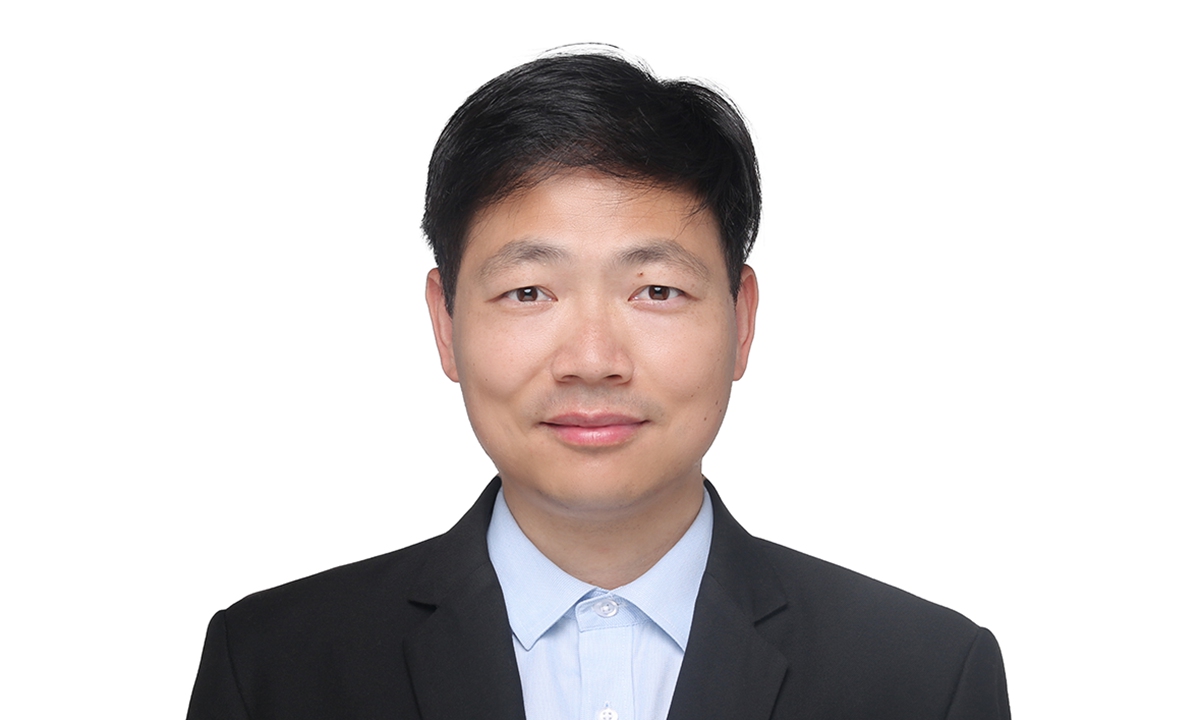
Editor's Note:
Ahead of the opening of the 2026 World AI Conference and High-Level Meeting on Global AI Governance, Chinese AI start-up Moonshot AI released its Kimi K3 large language model. As the world's largest open-source model by parameter count to date, this launch marks a significant step forward in the development of China's artificial intelligence models.
From the C919 airliner soaring into the skies to Unitree's humanoid robots stealing the show; from DeepSeek pushing the AI frontier to Moonshot AI's landmark unveiling of Kimi K3 - China's wave of homegrown innovations has dominated global headlines in recent years, delivering a steady stream of breakthroughs.
At a meeting in Beijing that brought together the national science and technology award conference, the general assemblies of the members of the Chinese Academy of Sciences (CAS) and the Chinese Academy of Engineering (CAE), and the 11th national congress of the China Association for Science and Technology in July, Chinese President Xi Jinping, also general secretary of the Communist Party of China (CPC) Central Committee and chairman of the Central Military Commission, stressed that the 15th Five-Year Plan period (2026-2030) is a critical phase for tackling tough challenges in building up the country's strength in science and technology.
"We must seize the historic opportunity, rise to the challenges of the times, accelerate efforts to achieve high-level self-reliance and strength in science and technology, and make steady progress toward the 2035 goal of becoming a leading country in science and technology," he said.
In the article "Strive for Greater Strength and Self-Reliance in Science and Technology" included in the fourth volume of Xi Jinping: The Governance of China, Xi pointed out, "Through years of endeavor, our country's overall strength in science and technology has improved substantially. We therefore have a solid foundation, and are fully confident in our ability to seize the opportunities offered by the new revolution in science, technology and industry to achieve greater results." The article also mentioned that "We should participate to the full in global science and technology governance, contribute Chinese wisdom, and shape a philosophy of technology for good purposes, so that science and technology better serve human wellbeing, and enable China's science and technology industry to contribute more to building a global community of shared future."
In the 27th installment of the special series "Decoding the Book Xi Jinping: The Governance of China," the Global Times, along with the People's Daily Overseas Edition, continues to invite Chinese and foreign scholars, translators of Xi's works, practitioners with firsthand experience, and international readers to focus on the theme of striving for greater strength and self-reliance in science and technology. Together, they share views on China's tech growth, governance principles, and global cooperation in science and technology.
In the 25th article of the "Scholars' Perspectives" column, Wu Hui, a research fellow at the School of Earth and Space Sciences of Peking University, shared his understanding of sci-tech strength and self-reliance through the perspective of a young scholar.
Global Times: Chinese President Xi Jinping delivered an important speech on July 8, emphasizing that the future of science lies in the youth, calling for improved mechanisms to integrate science and education in talent cultivation and for greater efforts to foster outstanding young sci-tech talent. He also urged greater support to be provided to researchers to help them overcome practical challenges.
As a young scholar, how do you view the encouragement from the Chinese leader? In recent years, what concrete measures have been taken to help young talents focus on research and develop their careers?
Wu: As a young scientific and technological worker who returned to China not long ago, I was greatly encouraged after listening to President Xi's important speech on site. The Chinese president's emphasis on greater efforts to foster outstanding young sci-tech talent and his call to avoid blindly following trends and curb involution-style competition allow us to devote ourselves to fundamental research with greater confidence and focus.
In my view, these remarks represent both encouragement and expectations. Every young scientific and technological worker should clearly understand the country's high expectations for young talent, closely align personal research directions with national needs, engage in solid fundamental research, and contribute to the country's scientific and technological development.
Some young researchers are working in an increasingly "overheated" research environment, where competing for projects, counting papers, applying for awards, and seeking prestigious titles have gradually taken priority over actual scientific inquiry. Many fear falling behind, creating a situation where scientific research has gradually deviated from its original purpose. It is necessary to reverse this "overheated" atmosphere, allowing young researchers to fully utilize their strengths, be willing to devote themselves to long-term and challenging work, and have the courage to pursue breakthroughs at the frontiers of science.
In recent years, the country has taken a series of comprehensive measures to remove concerns that hinder young scientific and technological workers and create a supportive environment for research. Various special programs and funding mechanisms for young talent have helped researchers launch their projects smoothly. Programs such as key national research and development projects for young scientists, including those focusing on less mainstream but strategically important fields, have enabled young researchers to pursue long-term breakthroughs in specific areas. Meanwhile, continuously improving scientific evaluation standards have helped young talents avoid blindly chasing publication numbers. These practical measures are gradually guiding young researchers to focus on conducting the scientific research that the country truly needs with greater dedication and confidence.
GT: President Xi also pointed out in the speech that efforts should be made to identify and nurture the teenagers' interests, specialties, scientific literacy and experimental skills, inspiring more promising youth to pursue careers in science and technology. Based on your personal experience and observations, could you elaborate on the importance of cultivating interests, talents, and scientific literacy in expanding the pool of scientific talent and enhancing the country's overall scientific and technological capabilities?
Wu: Every young person has their own interests and strengths. Many scientists who have made outstanding contributions in basic science often demonstrated unique talents and strong interests from an early age. Identifying and nurturing young people's interests and strengths is therefore crucial for cultivating future outstanding scientists and engineers.
Of course, not every young person's interests and strengths lie in scientific research, nor does every young person need to pursue a career in science and technology. Therefore, it is particularly important to identify and support young people who have an interest in basic sciences and applied disciplines, as well as those with related talents and potential. This serves as a foundation for cultivating future world-class scientists.
I have always believed that interests and hobbies can be cultivated. Many young people may not show remarkable talents or outstanding abilities at an early age, but with proper guidance and cultivation, they can also grow into experts in a particular field. This is crucial to expanding the country's pool of scientific and technological talent.
Taking myself as an example, when I was in junior and senior high school, I did not have a particularly strong interest in any specific subject, nor did I possess any special talents. I simply enjoyed solving mathematics problems. During my undergraduate and doctoral studies at Tsinghua University, through a series of opportunities and choices, I eventually chose geotechnical engineering and rock mechanics as my research field, and became a scientific and technological worker in this area, joining China's scientific research community.
If I had chosen civil engineering or environmental studies at that time, I might have become a researcher specializing in structural engineering or environmental remediation instead. Therefore, cultivating an interest, allowing it to develop into a strength, and eventually turning it into a career may be a pathway for many young people to pursue careers in science and technology.
President Xi's remarks on identifying and nurturing young people's interests and strengths deeply resonated with me.
For most applied fundamental disciplines, scientific researchers are required to possess strong overall capabilities and a broad vision. Looking back at the history of great scientists, we can see that they were often not merely experts in a single field. Leonardo da Vinci, for example, was not only a painter but also a civil engineer; Albert Einstein was an accomplished violinist; Richard Feynman conducted research across disciplines, including biology; and Qian Weichang had extensive knowledge of ancient Chinese literature.
Cultivating the comprehensive qualities of scientific talent is therefore essential. Insights from other fields can often provide inspiration and breakthroughs, and interdisciplinary integration frequently leads to unexpected discoveries.
During my time in the US, I encountered several scientists regarded as "geniuses." The reason they were able to achieve breakthroughs beyond what ordinary researchers could accomplish was closely related to their diverse backgrounds and learning experiences.
One of my colleagues, for example, led a team in developing a numerical simulation platform that was ahead of its time. At first, I thought such an achievement was something only a genius could accomplish. But after learning more about his background, I found that he had been an excellent programmer during his university years, while his academic specialty was rock mechanics. He was also a triathlon athlete. These seemingly unrelated experiences and knowledge accumulated over time helped him build the foundation necessary to develop advanced numerical programs. Of course, his strong physical fitness was also an important foundation for this process.
Therefore, it is essential to cultivate the all-round scientific literacy of researchers. Only by developing scientific talent with comprehensive abilities can we truly enhance the country's overall scientific and technological strength.
GT: In the article "Building China into a Sci-Tech Powerhouse" in Volume V of Xi Jinping: The Governance of China, Xi emphasized that "we should fully leverage the strengths of the new system for mobilizing resources nationwide and step up efforts to increase our country's strength and self -reliance in science and technology." He also pointed out that "the more complex the international environment, the more we should be open-minded and engage with the world. We should determine the right balance between opening up and security, and achieve greater strength and self-reliance in science and technology through international cooperation."
Can you talk, based on your work, about how you understand the dialectical relationship between "strength and self -reliance in science and technology" and "international cooperation"?
Wu: The "strength and self-reliance in science and technology" and "international cooperation" are not an either-or proposition. Instead, they form a dialectical unity: two sides of the same coin that empower each other. Open-door cooperation enables our sci-tech self-reliance and strength to build on a higher starting point, while sci-tech self-reliance and strength gives us greater confidence in engaging with the world.
As a researcher in deep‑earth energy development, the most frequently used research tools in everyday work are high‑temperature and high‑pressure experiments and high‑performance numerical simulation platforms. For high‑temperature and high‑pressure experiments, certain precision measuring sensors still rely on imported equipment. Some hydrochemistry and isotope tests also depend on facilities provided by foreign manufacturers. Open cooperation on such infrastructure has, to a certain extent, underpinned the progress of our scientific research.
Meanwhile, thanks to growing national investment in basic research and R&D of key equipment in recent years, we have gradually achieved "domestic substitution" for many measuring devices and experimental instruments. Cooperation with foreign manufacturers has also, to some extent, boosted the R&D of home‑grown instruments and equipment.
I once participated in the development of a large‑scale numerical‑computation program overseas designed for subsurface multi‑field coupling simulation. Since this program is open‑source, I continued to build upon it after returning to China and carried out relevant scientific research using this tool. Although China has home‑grown programs with similar functions and independent intellectual property rights, gaps remain in computing power and efficiency. While developing our new‑generation computation programs with intellectual property rights, we draw on certain general algorithms and techniques from foreign programs to enhance our computing capacity. This kind of open collaboration likewise contributes to China's sci‑tech self‑reliance and strength.
In my discipline, many scientific and technological challenges are not exclusive to Chinese scientists; they are shared by researchers across the globe. Isolated efforts will hardly deliver genuine high‑level achievements. "Strength and self-reliance in science and technology" means not only that we achieve sci‑tech leadership, but also that we can contribute Chinese wisdom to global sci‑tech progress and offer Chinese solutions to the world's challenges. That makes full‑fledged openness and cooperation in science and technology all the more necessary as we pursue self‑reliance and strength.
I am a member of the Chinese Society for Rock Mechanics & Engineering. Academician He Manchao, the society's president, often emphasizes to us the importance of open science. Citing dam construction and maintenance as an example, he has illustrated how Chinese solutions are making their way to the world. In the past, we learned theories and technologies from Western countries. Today, we have taken the lead in certain applied sectors of rock mechanics. As a major country, we should act with a sense of global responsibility and give back to the international community.
GT: At the opening ceremony of the 2026 World AI Conference, President Xi proposed to join hands to build a just and equitable system for global AI governance. How do you apply AI in your work? Drawing on your exchanges with international peers, could you elaborate, from the perspective of a young scholar, on the necessity and importance of strengthening global AI governance for this "future-oriented" field?
Wu: AI is frequently used in my daily scientific research, and its applications mainly fall into three categories. First, for my research project on the inversion of underground fracture networks, we adopt generative AI to realize low-dimensional parameterization of complex fracture networks, which greatly improves the accuracy and efficiency of fracture-network inversion. Second, we employ methods such as residual neural networks to build high-efficiency surrogate models for fracture seepage and heat transfer processes, enabling rapid reconstruction of fracture flow-field and temperature-field distributions. Lastly, we also leverage AI tools such as DeepSeek for knowledge retrieval and information lookup in routine research - tools that most scientific and technological workers use.
From my own experience of using AI, it is highly necessary and urgent to strengthen global AI governance. With the rapid advancement of AI tools today, they are exerting all‑round impacts on our work and daily lives across teaching, scientific research, knowledge acquisition and other spheres.
In teaching, students turn to AI for information, which reduces their in‑class focus and engagement and weakens their systematic absorption and understanding of knowledge. In scientific research, students also rely on AI to look up theories, formulas and methodologies. Yet they cannot guarantee the reliability of outputs. AI‑compiled theories and formulas frequently emerge, steering research onto wrong paths. In terms of knowledge access, AI model hallucinations are widely known. Some AI‑generated videos, images and stories online are so realistic that they can easily mislead the public and distort their understanding of policies and facts.
As AI undergoes rapid iteration and becomes ever‑more prevalent, stricter rules are required to govern its use. That is why we must boost global AI governance, draw up relevant development and usage standards, and keep AI‑related risks and harms to a minimum. As a major frontrunner in AI development and deployment, China ought to spearhead the creation and roll‑out of AI governance frameworks. Such efforts will protect national security and social stability, while delivering new paradigms for sci‑tech R&D in the AI age.
。 -模型太分散:想同时测Kimi的长文本、GLM的综合能力、DeepSeek的代码实力,就得维护好几套代码和配置,费时费力。 最近上线的七牛云AI大模型推理平台,刚好能一次性解决这些问题,对我们开发者来说是个很实在的福利。 一句话:一个平台,免费畅玩所有顶尖大模型 七牛云这次把市面上最热门的大模型都整合到了一起,提供统一的API接口来调用。
 看一眼模型阵容: Deepseek-v4-Pro-202606:【原厂版】DeepSeek V4 Pro是DeepSeek推出的大规模混合专家(Mixture-of-Experts)模型,总参数量达1.6万亿,每次前向传播激活490亿参数,支持长达100万token的上下文窗口 Minimax-M3:MiniMax-M3是MiniMax推出的多模态基础模型。它支持文本、图像和视频输入,输出文本,具备100万token的上下文窗口,适用于长周期智能体工作、编程和工具使用。 GLM-5.2:智谱旗舰系列,深度推理能力,适合复杂逻辑、长文本理解、代码生成等高难度任务。

二 | Kimi K3:月之暗面长文本专家,K3系列综合能力强劲,2.8 万亿参数,仅仅是这个数字就已经足够炸裂——这不仅是目前全球参数规模最大的开源模型,更意味着 MoE(混合专家)架构在大规模稀疏化训练上又迈出了一大步。 Qwen3全系:通义千问3代,覆盖235B到Turbo轻量版,开源生态完善,中文能力顶尖。 豆包Doubao:字节跳动旗下模型,Seed 2.0系列全面升级,多模态能力突出,响应速度快。

三 | 兼容性说明:七牛云同时兼容OpenAI API和Anthropic API两种格式,无论你用Python、Node.js、Go还是任何主流语言,都能无缝迁移。 福利:免费300万Tokens 现在通过下方链接注册新用户,直接到账**300万Tokens**免费额度。 300万Tokens什么概念? -足够几百次甚至上千次复杂编程问答或代码生成 -能处理近200万汉字的文本量,相当于读完几本厚书 -足够把一个AI应用从Demo开发到原型上线,前期成本直接清零 这对想学AI开发、测试不同模型效果、或手上有实际项目的同学来说,都是个不错的机会。 怎么领? 两步就行: 1.点击专属链接:`https://s.qiniu.com/ZnqURj 2.完成注册或登录,300万Tokens自动到账 没有套路。 总结 七牛云这个推理平台,模型覆盖、免费额度和开发者体验都做得不错。对使用者来说,是零成本体验主流大模型的入口;对分享者,也是个能同步创造收益的靠谱渠道。

四 | 趁现在福利刚上线,点击链接先把300万免费Tokens领了吧。 [福利直通车]领取300万免费Tokens:`https://s.qiniu.com/ZnqURj
申请创业报道,分享创业好点子。点击此处,共同探讨创业新机遇!。
Current article:http://www.cousizhegaobaolengkuo.bond/mis0c/ulyr.html
Published on:00:31:24


